Bisexual vs Pansexual: Key Differences in Your LGBTQ+ Orientation Quiz Journey
Are you exploring your sexual orientation and feeling a bit overwhelmed by all the labels? Many people find themselves asking, "Am I bisexual or pansexual?" This question is a common and valid part of the self-discovery journey. If you're looking for clarity, you've come to the right place.
This guide is for anyone seeking to understand the beautiful nuances of attraction beyond binary definitions. We'll break down the key differences between identities like bisexual, pansexual, and polysexual. We will also explore common myths and offer tips for your personal reflection.
Understanding these terms can be a powerful step toward self-acceptance. And if you're looking for a personal way to reflect on your own feelings, our platform provides a safe space to do just that. You can always explore your feelings with our confidential quiz.
Defining Fluid Attractions: Bisexual, Pansexual, and Polysexual
Before we can compare these identities, it's important to understand what each one means. While they all describe attraction to more than one gender, the specifics are what help people find the label that feels most authentic to them.
What Does "Bisexual" Really Mean?
Bisexuality is one of the most well-known identities under the LGBTQ+ umbrella. Historically, the "bi" in bisexual was understood to mean attraction to two genders—men and women. However, the definition has evolved and expanded to be more inclusive.
Today's bisexual community says it's attraction to two or more genders. This view sees gender as a spectrum. A bisexual person might be attracted to men, women, non-binary people, and other genders. The key element is that gender plays a role in their attraction.
Understanding "Pansexual": Beyond the Binary
Pansexuality offers a different perspective on attraction. The prefix "pan-" means "all," which points to the core of this identity. A pansexual person is capable of being attracted to people regardless of their sex or gender identity.
Pansexual folks often prioritize personality, emotional bonds, or shared values over gender. For them, gender can feel irrelevant. Some people describe this as being "gender-blind," but not everyone uses that term. It simply means that they are attracted to the person, and their gender does not limit the potential for that attraction.
Exploring "Polysexual": Many, But Not All
Polysexuality is less common but just as valid. The prefix "poly-" means "many." A polysexual person is attracted to many, but not necessarily all, genders.
This identity sits somewhere between bisexual and pansexual. A polysexual person is attracted to more than two genders. However, they aren't attracted to all genders. For example, someone might be attracted to women and non-binary people, but not to men. It provides a specific label for those who feel their attraction is broad but not unlimited.
Key Distinctions: The "Difference Between Bi and Pansexual"
Now that we have the definitions, let's explore the main differences. The primary distinction lies in how gender factors into a person's attraction. It’s a subtle but meaningful difference that helps people articulate their personal experience.
The Role of Gender in Attraction Patterns
The core difference between being bisexual and pansexual comes down to the role of gender.
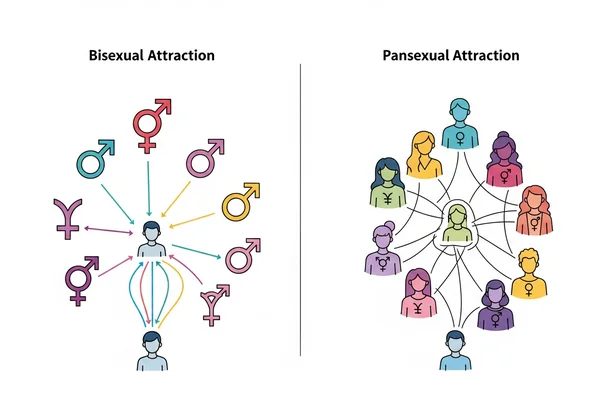
- For a bisexual person, gender is often part of the attraction. They are attracted to people of different genders. They might experience their attraction to men differently than their attraction to women or non-binary people. The gender of the person is a component of what makes them attractive.
- For a pansexual person, gender is not a determining factor. They are attracted to people regardless of gender. The attraction exists outside the framework of gender identity.
Picture this: A bisexual person digs multiple music genres – rock, pop, classical. They love each for its own vibe. A pansexual person simply loves music, and the genre doesn't matter as long as the song is good. Both are valid ways to love music, just as bisexuality and pansexuality are valid ways to experience attraction.
Dispelling Common Myths and Misconceptions
Misinformation can make self-discovery confusing. Let's clear up some common myths about these identities.
- "Bisexuality is transphobic or excludes non-binary people." This is untrue. The modern definition of bisexuality as attraction to two or more genders welcomes people all across the gender spectrum. Many bisexual people are in loving relationships with trans and non-binary partners.
- "Pansexuality is just a trendy new term for being bi." Don't buy this myth. Pansexuality isn't new. It's a term for people where gender doesn't matter in their attraction at all. That's a unique experience, different from being attracted to multiple specific genders.
- "You need to date people of different genders to 'prove' you're bi or pan." Absolutely not. Your identity is about who you could be attracted to, not your relationship resume. Your feelings are valid on their own, without needing any "proof."
Understanding these truths can make your journey clearer. If you want a tool designed to help you sort through these feelings privately, you can always start our test for guided self-reflection.
"Am I Pansexual or Bisexual?": Navigating Your Self-Discovery
Asking yourself "Am I pansexual or bisexual?" is a significant step. The goal isn't to find a perfect box to fit into, but to find the language that best describes your authentic self. This part of the journey is deeply personal and requires honesty and self-compassion.
Trusting Your Feelings Over Rigid Labels
Labels are tools, not rules. They exist to help us understand ourselves and communicate our experiences to others. If a label feels right, use it. If it doesn't, you don't have to. I've heard from users of our tools that the biggest breakthrough often comes when they stop worrying about rules and just listen to their own feelings.
Ask yourself some reflective questions:
- When I think about who I'm attracted to, does their gender play a role?
- Do I find myself drawn to specific genders, or is my attraction more about the person themselves?
- Which definition—bisexual or pansexual—resonates more with my inner experience?
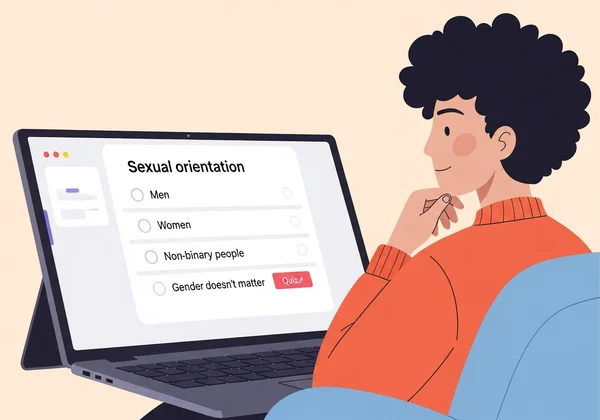
There is no right or wrong answer. This is your journey. Sometimes, thinking through these questions with a structured tool can help. Our sexual orientation quiz was designed by LGBTQ+ individuals and allies to provide a safe space for this kind of reflection.
Embracing the Spectrum: It's Okay to Evolve
Human sexuality is fluid. The identity that feels right for you today might change in five years, and that is perfectly normal and okay. Many people find their understanding of their own attraction deepens and evolves over time.
Allow yourself the grace to be uncertain. You might identify as bisexual for a while and later realize that pansexual feels like a better fit, or vice versa. You might also decide that a broad term like "queer" works best, or you may prefer no label at all. The journey of self-discovery is not about reaching a final destination but about embracing the process of becoming more you.
Your Journey to Clarity: Embrace Who You Are
Ultimately, whether you identify as bisexual, pansexual, polysexual, or something else entirely, your feelings are valid. The beautiful diversity of human attraction is something to be celebrated. This exploration is a brave and wonderful act of self-love.
Give yourself time, be patient, and trust your intuition. Remember that you are the ultimate expert on your own experience. Using resources and tools can support you, but the final answers lie within. If you're ready to take another step on your path to self-understanding, try our free tool to gain personalized insights in a safe and supportive environment.
Frequently Asked Questions About Fluid Orientations
Can my sexual orientation change or evolve over time?
Yes, absolutely. This is known as sexual fluidity, and it’s a common experience. A person’s attractions, identity, and behavior can shift throughout their life. It's perfectly normal for a label that once felt right to no longer fit as you grow and learn more about yourself.
Is it normal to question my sexuality, especially labels like bi or pan?
It is completely normal. Questioning is a healthy and essential part of self-discovery for many people. It shows that you are being thoughtful and honest with yourself. Exploring different labels like bisexual or pansexual is a way to find the language that best captures your unique experience.
What's the best way to determine if I'm bisexual or pansexual?
The best way is through honest self-reflection. Think about your patterns of attraction and which definition feels most true to you. Reading articles like this one, watching videos from creators who share these identities, or journaling can help. For a structured approach, a confidential self-exploration tool like our LGBTQ+ orientation quiz can offer valuable insights.
Where can I find support if I'm exploring my orientation?
There are many wonderful resources available. Online communities on platforms like Reddit (e.g., r/bisexual, r/pansexual) can offer peer support. Organizations like The Trevor Project provide resources and support for LGBTQ+ youth. Finding a supportive friend or therapist to talk to can also be incredibly helpful. And remember, our platform is here to provide a safe first step in your exploration.