Exploring Your Identity: The Role of a Gay Test
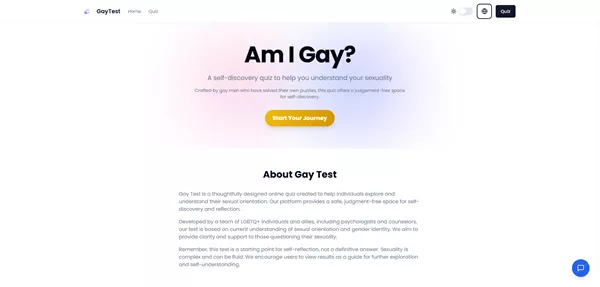
Curious about your sexuality and wondering "am I gay"? A gay test can be a starting point for self-exploration, but are online "gay tests" accurate? It's important to approach these tools with a critical eye. Explore the purpose and limitations of a gay test, and then discover more about yourself with our tool.
What is a Gay Test? Debunking Myths and Misconceptions
The term "gay test" can be misleading. It's not a definitive diagnostic tool, but rather an online self-assessment designed to explore your feelings and attractions. Let's debunk some common misconceptions about sexuality quizzes and understand the limitations of these online assessments. Remember, these quizzes are not meant to label you, but rather to prompt introspection.
Defining a "Gay Test": What it is and isn't
A "gay test" typically consists of a series of questions about your preferences, attractions, and experiences. It's designed to provide insights into your potential sexual orientation, but it's not a substitute for professional guidance.
Common misconceptions about sexuality quizzes
Many believe that a sexuality quiz can definitively determine if someone is gay, straight, or bisexual. However, these quizzes are subjective and based on self-reported information. They should be seen as a fun and thought-provoking exercise, not a final answer.
The limitations of online assessments
Online assessments can be influenced by various factors, including your mood, understanding of the questions, and desire to present yourself in a certain way. Therefore, it's crucial to interpret the results with caution and consider them alongside your own feelings and experiences.
The Psychology Behind Self-Discovery: Why We Seek Labels
The desire to understand ourselves is a fundamental human need. We often seek labels, including those related to the LGBTQ, as a way to make sense of our experiences and connect with others. Let's explore the psychology behind the human need for categorization and the role of social influence on self-perception.
The human need for categorization
Humans are naturally inclined to categorize information to simplify the world around them. Seeking labels for our sexuality helps us understand ourselves, find community, and navigate social interactions.
Identity formation in adolescence and adulthood
Our understanding of our identity, including our sexuality, often evolves throughout adolescence and adulthood. Exploring different labels, such as "queer," can be a part of this process.
The role of social influence on self-perception
Our social environment, including our family, friends, and the media, can influence our self-perception and understanding of our sexuality. It's essential to be aware of these influences and consider how they might be shaping your thoughts and feelings.
Beyond the Binary: Understanding the Spectrum of Sexuality (LGBTQ+)
Sexuality is not always a simple choice between "gay" or "straight." It exists on a spectrum, encompassing a wide range of identities and experiences. Let's explore the LGBTQ+ spectrum, including the fluidity and diversity in sexual orientation, and the importance of inclusive language.
Introducing the LGBTQ+ spectrum
The LGBTQ+ acronym represents a diverse community of individuals with different sexual orientations and gender identities. It includes lesbian, gay, bisexual, transgender, queer, and other identities.
Fluidity and diversity in sexual orientation
Some people's sexual orientation may remain consistent throughout their lives, while others may experience fluidity, meaning their attractions and feelings can change over time. It's important to recognize and respect this diversity.
The importance of inclusive language
Using inclusive language, such as acknowledging the LGBTQ community and respecting individual pronouns, is crucial for creating a welcoming and affirming environment for everyone.
Online Quizzes vs. Self-Reflection: Which is More Effective?
When questioning your sexuality, both online quizzes and self-reflection can be valuable tools. However, they have different strengths and limitations. Let's weigh the pros and cons of online "gay tests" and the value of introspective practices.
Pros and cons of online "gay tests"
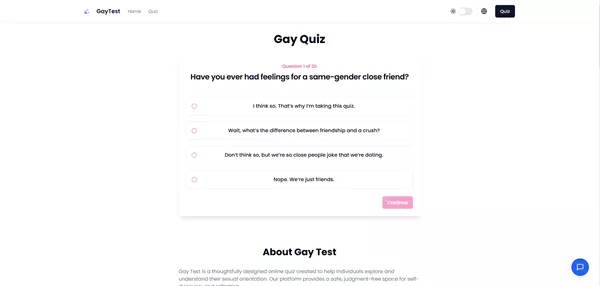
Online "gay tests" can be a fun and accessible way to begin exploring your sexuality. They can introduce you to different concepts and prompt you to think about your attractions and experiences. However, they should not be used as a definitive answer and can lack nuance.
The value of introspective practices
Self-reflection, such as journaling, meditation, and talking to trusted friends or family members, can provide deeper insights into your feelings and desires. These practices allow you to explore your sexuality in a safe and supportive environment.
Combining online tools with personal reflection
The most effective approach often involves combining online tools with personal reflection. Use the quizzes as a starting point, but then delve deeper into your own thoughts and feelings to gain a more comprehensive understanding of yourself.
The Importance of Self-Acceptance: Embracing Your True Identity
The journey of self-discovery can be challenging, but it's essential to embrace your true identity, whatever it may be. Let's discuss overcoming societal pressures and expectations, building self-esteem and confidence, and celebrating individuality and authenticity.
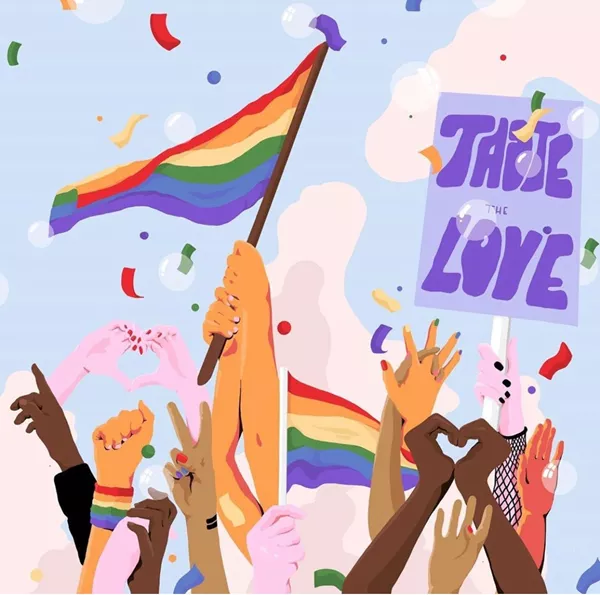
Overcoming societal pressures and expectations
Many people face societal pressures to conform to traditional norms of sexuality. It's important to remember that your value as a person is not determined by your sexual orientation.
Building self-esteem and confidence
Self-acceptance is crucial for building self-esteem and confidence. Focus on your strengths and accomplishments, and surround yourself with supportive people who value you for who you are.
Celebrating individuality and authenticity
Embrace your unique qualities and celebrate what makes you, you. Authenticity is a powerful force that can lead to greater happiness and fulfillment.
Seeking Support: Resources for LGBTQ+ Individuals
If you're questioning your sexuality or navigating your identity, it's important to seek support from trusted sources. Let's explore finding LGBTQ+ support groups and communities, accessing mental health resources and therapy, and connecting with LGBTQ+ role models and mentors.
Finding LGBTQ+ support groups and communities
Connecting with others who share similar experiences can provide a sense of belonging and validation. Look for LGBTQ+ support groups and communities online or in your local area.
Accessing mental health resources and therapy
A therapist can provide a safe and supportive space for you to explore your sexuality and address any challenges you may be facing. Look for therapists who are knowledgeable and affirming of LGBTQ identities.
Connecting with LGBTQ+ role models and mentors
Seeing successful and happy LGBTQ+ individuals can provide hope and inspiration. Seek out role models and mentors who can offer guidance and support.
Gay Test: A Starting Point, Not a Destination
Ultimately, a gay test is simply a tool to help you begin exploring your sexuality. It's not a definitive answer, but rather a starting point for a journey of self-discovery and acceptance. Remember to prioritize your own feelings and experiences, and seek support from trusted sources as you navigate your identity. If you are interested in finding your attractions, you can start the sexuality test on our platform.
FAQ:
What is a "Gay Test" and What Does It Measure?
A "Gay Test" is an online self-assessment designed to help you explore your feelings and attractions. Ready to take a self-assessment and learn more about your gay test and what it can reveal about your sexual orientation?
Are Online "Gay Tests" Accurate?
Online "gay tests" should be viewed as a starting point for exploration rather than a definitive answer. The results of a gay test should be interpreted with caution and considered alongside your own feelings and experiences.
What if My "Gay Test" Results Don't Match My Feelings?
If your "gay test" results don't align with your feelings, that's perfectly okay. It's important to prioritize your own sense of self and explore your identity in a way that feels authentic to you.
Where Can I Find Support if I'm Questioning My Sexuality?
If you're questioning your sexuality, it's important to seek support from trusted sources. Visit https://gaytest.me to start your journey for better understanding.
Is it Okay to Identify as "Queer" If I'm Still Figuring Things Out?
Yes, it's perfectly okay to identify as "queer" if you're still figuring things out. "Queer" is an umbrella term that can be used to describe a variety of non-heterosexual identities.