What's Homosexual? Meaning, Examples, and Sexual Orientation Basics
If you searched "what's homosexual," you are probably looking for a clear, respectful definition without judgment or confusing jargon. Homosexual means being romantically and/or sexually attracted to people of the same sex or gender. Some people use the word as a formal adjective, while many prefer everyday identity words such as gay or lesbian. However someone describes themselves, the important point is that sexual orientation is about patterns of attraction, not stereotypes, appearance, hobbies, or personality. If you are exploring what these terms might mean for you personally, a private sexual orientation self-reflection tool can be one gentle way to organize your thoughts while you keep your own pace.

What Does Homosexual Mean?
Homosexual is an adjective for same-sex or same-gender attraction. A homosexual man is usually a man who is attracted to men. A homosexual woman may describe herself as lesbian, gay, queer, or another word that feels more accurate to her. Some nonbinary people may also use gay, lesbian, queer, or other identity words, depending on how they understand their gender and attraction.
The word can describe different but related things: attraction, identity, relationships, and behavior. Attraction is what you feel. Identity is the label, if any, that you choose for yourself. Relationships are the emotional or romantic bonds you form. Behavior is what someone does or does not do. These parts often line up, but not always. A person may feel same-gender attraction before they have ever dated anyone, or they may avoid labels while still noticing a pattern in their feelings.
This is why a definition should leave room for real life. Homosexuality is not a fashion style, a phase someone can be forced out of, or a personality type. It is one part of human sexuality. For many people it feels stable over time; for some, the words they use for themselves may shift as they learn more.
Homosexual, Gay, Lesbian, and Queer: How the Words Differ
"Homosexual" is often used in medical, academic, legal, or historical writing. In everyday conversation, it can sound overly clinical, especially when used as a noun, as in "a homosexual." Many people prefer "gay man," "lesbian," "gay person," "queer person," or simply the identity label they personally use.
"Gay" commonly means a man who is attracted to men, but it can also be used broadly by people of several genders. "Lesbian" usually means a woman or some nonbinary people who are attracted to women. "Queer" is a reclaimed umbrella word for many LGBTQ+ identities, though not everyone is comfortable with it because it has also been used as an insult. The best approach is simple: use the word a person uses for themselves.
If you are writing or speaking generally, "same-gender attraction," "gay and lesbian people," or "people with same-sex attraction" may sound warmer than "homosexuals." The meaning matters, but tone matters too.
Homosexual and Heterosexual: What Is the Difference?
Homosexual and heterosexual describe different patterns of attraction. Homosexual means attraction to the same sex or gender. Heterosexual means attraction to a different sex or gender, often described as straight. Bisexual generally means attraction to more than one gender, while pansexual often means attraction where gender is not the main factor. Asexual describes people who experience little or no sexual attraction, though they may still experience romantic attraction.
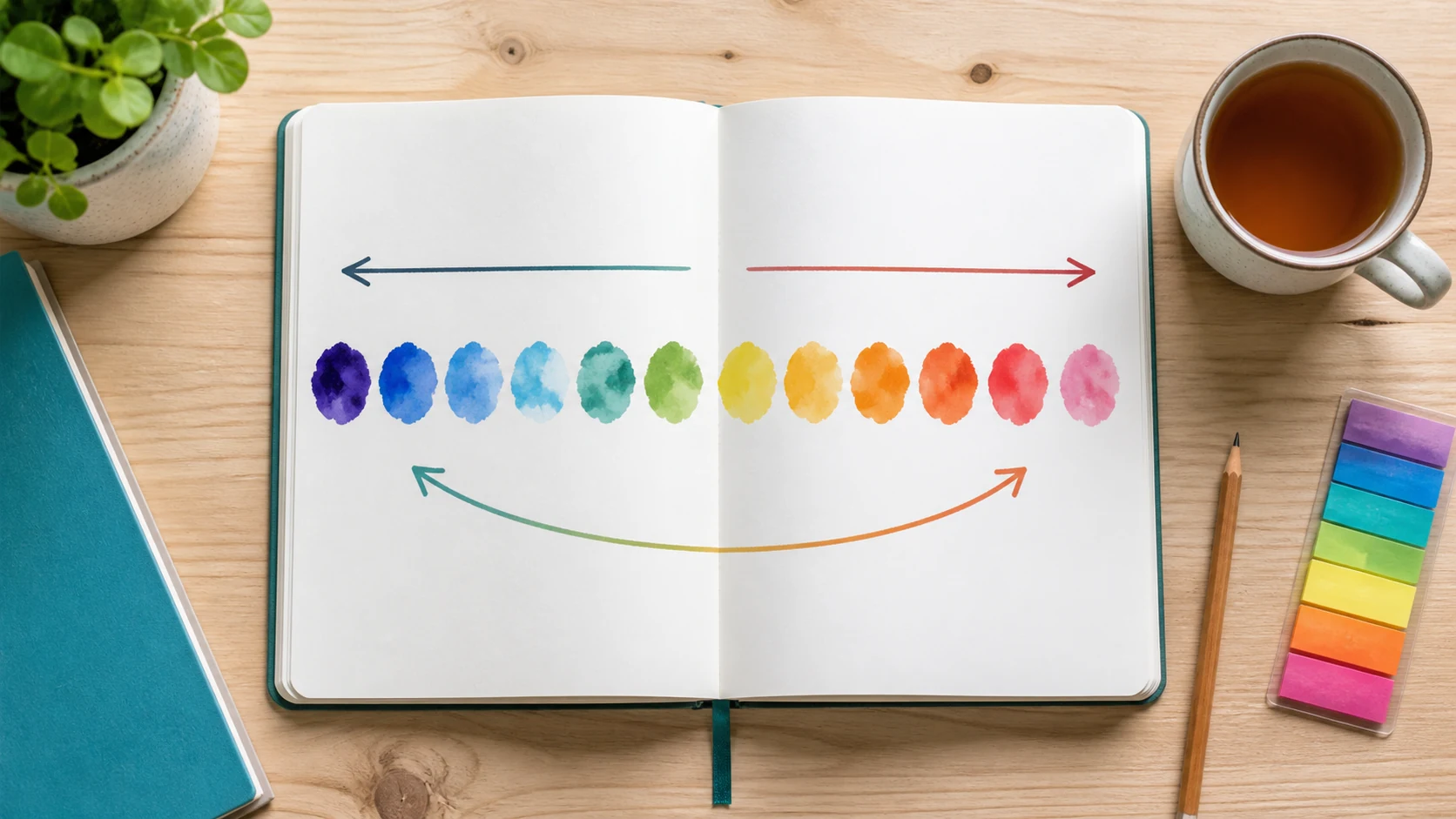
These words are categories, not boxes with hard walls. Human attraction can include sexual attraction, romantic attraction, emotional closeness, fantasy, admiration, and partnership hopes. Someone might feel romantic attraction before sexual attraction. Someone else might feel sexual attraction but not want a relationship. Another person might notice their attraction patterns only after years of assuming they were straight.
If you are comparing terms because you are unsure where you fit, try looking less for a perfect label and more for repeated patterns. Who do you imagine dating? Who gives you butterflies? Whose attention feels meaningful? Which connections feel like friendship, and which feel romantic or sexual? A gentle LGBTQ+ orientation quiz experience can support that reflection, but your identity remains yours to name.
What Makes Someone Homosexual?
There is no single simple cause that explains sexual orientation for every person. Research and professional guidance generally describe orientation as shaped by a complex mix of biological, developmental, psychological, and social factors. That does not mean someone "decides" to become gay, lesbian, or straight in the way someone decides what to eat for lunch. Most people experience attraction as something they notice rather than something they manually choose.
It is also unhelpful to blame parenting, hobbies, trauma, clothing, or friend groups. Those explanations often come from stigma, not from careful understanding. A person can grow up in many kinds of families and still be gay, straight, bisexual, asexual, or something else. A person can enjoy sports, fashion, gaming, art, makeup, or mechanics, and none of those interests proves anything about their orientation.
For a questioning person, the more useful question is not "What caused this?" but "What am I honestly noticing?" You might pay attention to attraction patterns over time, how different kinds of closeness feel, and whether a label brings relief, pressure, or both. Curiosity is allowed. Uncertainty is allowed too.
Homosexual Examples in Everyday Life
An example of homosexuality could be a man feeling romantic and sexual attraction toward other men, a woman falling in love with another woman, or two people of the same gender building a committed relationship. It could also be quieter than that: a teenager realizing their crushes are mostly on same-gender classmates, an adult noticing that same-gender intimacy feels emotionally meaningful, or someone recognizing a pattern after years of trying to explain it away.
Homosexuality does not require a relationship history. You do not need to date someone, have sex, come out publicly, or prove anything to make your feelings real. Attraction can exist before action. Identity can develop privately before it is shared. Some people know early; others understand later. Both paths are common.
It is also possible for behavior and identity to differ. A person may have had same-sex experiences and still not identify as gay. Another person may identify as gay without much relationship experience. Labels are tools for communication and self-understanding, not courtroom evidence.
Is Homosexuality the Same as Gender Identity?
No. Sexual orientation and gender identity are related parts of human experience, but they are not the same. Sexual orientation is about who you are attracted to. Gender identity is about who you are: man, woman, nonbinary, another identity, or no fixed label.
A transgender person, for example, can be gay, straight, bisexual, lesbian, asexual, pansexual, queer, or another orientation. A cisgender person can be any orientation too. Knowing someone's gender does not automatically tell you who they are attracted to, and knowing someone's orientation does not tell you their gender.
This distinction matters because many people mix the terms together. A gay man is not gay because he is feminine; he is gay because he is attracted to men. A lesbian is not lesbian because of her haircut or clothes; she is lesbian because of her attraction to women. Stereotypes may feel easy, but they usually make people less understood.
What About Religion, Language, and Culture?
Searches like "what is homosexuality in the Bible," "what is homosexual in Spanish," or "what is homosexual in German" show that many people are trying to understand the word across culture, faith, and translation. In Spanish, common terms include "homosexual" and "gay." In German, "homosexuell" and "schwul" may appear, though tone and context matter. In religious contexts, translations may use phrases about same-sex relations, sexual behavior, or older historical terms rather than modern identity language.
If religion is part of your life, it can help to separate three questions: What does a text say in its historical language? How does my community interpret it? What support do I need while I think about my identity or the identity of someone I love? Those questions may lead to different conversations. Some LGBTQ+ people remain deeply religious; some step away from certain communities; some look for affirming faith spaces.
Culture also affects safety. In some families or regions, coming out may feel supportive. In others, privacy may be necessary. A respectful definition should never pressure someone to disclose before they are ready.

A Gentle Way to Keep Exploring Your Orientation
If the word homosexual feels relevant to you, you do not have to settle everything at once. You can journal about crushes, notice patterns in attraction, read LGBTQ+ stories, talk with trusted people, or work with an affirming counselor if the topic brings distress. If you are in an unsafe environment, privacy and planning matter more than rushing toward a public label.
You might also ask yourself a few grounded questions:
- When I imagine a happy relationship, who appears in that picture?
- Do I feel romantic attraction, sexual attraction, both, or neither?
- Am I drawn to a label because it fits, or because I feel pressured to choose one?
- What kind of support would help me feel safe and honest?
The Gay Test site offers private sexuality exploration resources for reflection, not a final authority over who you are. Use tools, guides, and conversations as mirrors, not judges. Your pace is allowed to be slow, private, and imperfect.
FAQ
Does homosexual mean straight?
No. Homosexual means attraction to the same sex or gender. Straight usually means heterosexual, or attraction to a different sex or gender.
What is an example of homosexuality?
An example is a man feeling romantic or sexual attraction toward men, or a woman feeling romantic or sexual attraction toward women. It may involve a relationship, a crush, or a private pattern of attraction.
What is homosexual orientation?
Homosexual orientation means a pattern of same-sex or same-gender attraction. It can involve emotional, romantic, and/or sexual attraction, and it may or may not match the label someone publicly uses.
Is being homosexual a choice?
Most people experience attraction as something they recognize, not something they choose on command. People can choose how they label themselves, who they tell, and what relationships they pursue, but attraction itself is usually not experienced as a simple decision.
What is a good age to come out?
There is no universal best age. A good time is usually when you feel emotionally ready, have considered your safety, and have at least one supportive person or resource. Some people come out young, some later, and some keep parts of their identity private.
Is homosexual the same as gay?
They overlap, but they are not always used the same way. Homosexual is more formal and can sound clinical. Gay is often the preferred everyday word, especially for men attracted to men, though some women and nonbinary people use gay too.
Can someone be homosexual and not have dated anyone?
Yes. Orientation is about attraction, not relationship history. A person can understand that they are gay or lesbian before dating, just as a straight person can know they are straight before having a relationship.