Gay vs Straight Meaning, Myths, and Real Differences
Searching "gay vs straight" can mean a lot of different things. You might want a plain definition, a serious answer about attraction, a reality check on memes, or a careful look at claims about brains, sex, health, and relationships. The most helpful starting point is simple: gay and straight describe patterns of attraction, not a person's worth, style, politics, body language, or future. If you are comparing these words because you feel unsure about yourself, a private, low-pressure tool like a supportive sexuality self-reflection quiz can help you organize your thoughts without turning one result into a fixed label.
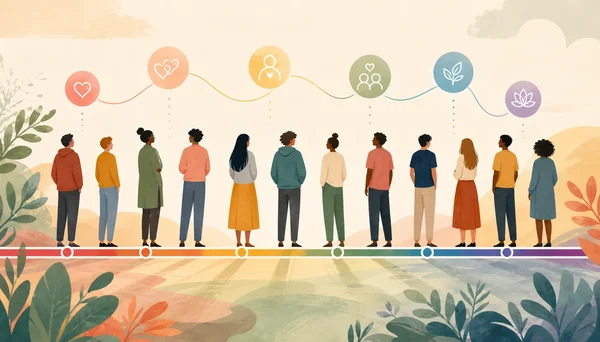
Gay and Straight Meaning in Plain English
Straight usually means a person is romantically, emotionally, and/or sexually attracted to people of a different gender. Gay usually means a person is attracted to people of the same gender. In everyday speech, "gay" is often used for men who are attracted to men, but some women and nonbinary people also use it for themselves.
Those definitions are useful, but they are not the whole map. A person can be bisexual, pansexual, asexual, queer, questioning, or use no label at all. The difference between gay and queer is especially important: gay is usually a more specific orientation word, while queer is often a broader umbrella term for identities and experiences outside straight or cisgender norms. Some people love queer because it feels flexible. Others avoid it because of its history or because it does not feel personal to them. Both reactions deserve respect.
The key point is that labels work best when they help you communicate, not when they trap you. If "straight" feels accurate, that is valid. If "gay" feels accurate, that is valid. If neither word quite fits, you are not failing the vocabulary. You are noticing that attraction can be layered.
Gay vs Straight Is Not a Personality Test
A lot of search interest around gay vs straight comes from jokes and stereotypes: "gay vs straight meme," "straightest gay person," "gay hand vs straight hand," or debates about gay men vs straight men. Memes can be funny when they punch up, build community, or exaggerate shared experiences. They become less useful when they pretend that fashion, voice, hobbies, posture, gestures, or music taste can prove someone's orientation.
There is no reliable visual checklist for telling whether a person is gay or straight. Some gay people are masculine. Some straight people are expressive. Some people are private, some are flamboyant, and many are simply themselves. Culture can shape how people perform gender, but gender expression is not the same thing as sexual orientation.
This also matters when you are looking inward. Maybe you do not match the stereotype you were taught about gay people. Maybe you do not match the stereotype you were taught about straight people either. That mismatch does not decide your orientation. A better question is: what patterns of attraction, affection, curiosity, fantasy, comfort, and relationship desire keep showing up when you are honest with yourself?
If you want a quiet way to sort those patterns, private orientation reflection questions may be more useful than trying to decode your identity through memes or other people's assumptions.
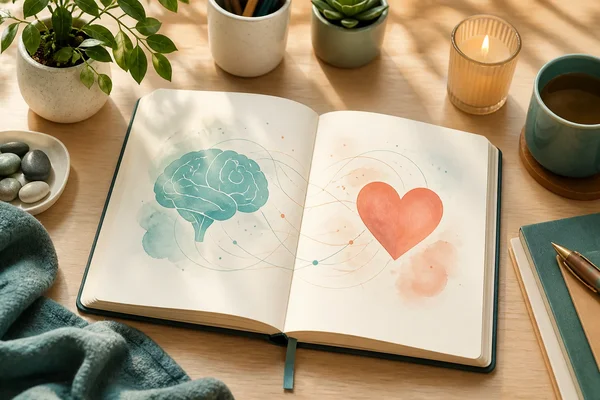
What About the Difference Between Gay and Straight Brains?
"Difference between gay and straight brains" is a tempting search because it sounds like science might offer a clean answer. Research has looked at group-level patterns in brain structure, brain connectivity, hormones, genetics, and development. Some studies have reported differences between groups. That does not mean a brain scan can tell one person's orientation, and it does not mean orientation is a disorder, a choice, or a simple on/off switch.
Good science is careful about limits. Many studies use small samples, specific methods, or narrow categories such as gay men and straight men. A finding about averages does not describe every individual in that group. It also may not say much about bisexual, pansexual, asexual, queer, trans, or nonbinary people.
So the best answer is balanced: sexual orientation appears to be connected to deep patterns of attraction and development, not a casual preference someone can force into being. At the same time, you do not need lab evidence to make your feelings legitimate. Your lived experience matters. Science can study patterns, but it cannot replace personal reflection or respectful self-understanding.
Sex, Health, and Relationship Stats Need Context
Search terms such as gay vs straight sex, HIV gay vs straight, STD rates gay vs straight, divorce rate gay vs straight, or gay vs straight suicide rates can lead to confusing and sometimes stigmatizing content. Statistics can be useful, but only when they are handled with context.
Health risks are not caused by a label by itself. They are shaped by behavior, access to testing and prevention, partner communication, healthcare quality, stigma, local policy, poverty, stress, and whether people feel safe asking for help. Talking about HIV or STIs as if they belong to one identity group is inaccurate and harmful. The practical takeaway is more universal: know your risks, use appropriate prevention, test when relevant, and choose healthcare providers who treat you with respect.
Relationship statistics need the same caution. Divorce rates, marriage satisfaction, or relationship patterns depend on legal access, social support, age, income, family acceptance, and how researchers define the comparison group. Same-sex couples have also lived through changing marriage laws, which makes simple "gay marriage vs straight marriage divorce statistics" claims easy to distort.
Mental health comparisons need even more care. Higher distress among LGBTQ+ groups, when it appears in research, is often connected to minority stress: rejection, discrimination, isolation, concealment, and fear of losing safety. That is not a flaw in being gay, queer, or questioning. It is evidence that support matters. If questions about identity are tied to intense anxiety, depression, self-harm thoughts, or obsessive checking, it is worth talking with a qualified mental health professional or a trusted crisis support service in your area.
How to Compare Without Turning It Into a Scoreboard
One competitor-style angle on this topic is playful: "being gay is better than being straight." Another is defensive: "which side is more normal?" Both can miss the better question. Gay vs straight should not be a scoreboard. It is a way to understand different patterns of attraction and the social meanings people attach to those patterns.
Try replacing comparison with reflection:
- What kinds of people do I repeatedly feel drawn to, emotionally or romantically?
- Are my fantasies, crushes, relationship hopes, and real-life attractions pointing in the same direction or different directions?
- Do I feel pressure to choose a label quickly because other people expect one?
- Which labels feel relieving, which feel too small, and which feel unfamiliar but worth learning about?
- What would I think about myself if I knew no one else would judge the answer?
This approach also leaves room for uncertainty. Some people know their orientation early. Some understand it after dating, friendship, community, therapy, art, faith reflection, or simply time. Some change the language they use as they learn more. You are allowed to move at a human pace.
A Gentle Next Step If You Are Unsure
If you searched gay vs straight because you are trying to understand yourself, you do not have to settle everything in one sitting. Start with patterns, not pressure. Notice who you are attracted to, what kinds of relationships you imagine, how your body and emotions respond, and whether fear is making one answer feel impossible to consider.
It can also help to separate orientation from other questions. Gender identity is about who you are. Sexual orientation is about who you are drawn to. Sexual behavior is what you do. Romantic attraction, sexual attraction, aesthetic attraction, and emotional intimacy can overlap, but they are not always identical.
For a structured but optional next step, you can explore Gay Test's private self-reflection experience. Treat it as a prompt for noticing your own patterns, not as an authority over your identity. Your label, if you use one, should support your life rather than shrink it.
FAQ
How do I know if I'm gay or straight?
Look for repeated patterns of attraction over time, not one isolated thought or one moment of curiosity. Notice romantic attraction, sexual attraction, emotional pull, and the kind of future relationships you can imagine. If anxiety is pushing you to check constantly, pause and focus on support rather than forcing an immediate answer.
What is the difference between gay and queer?
Gay is usually a specific orientation word for same-gender attraction. Queer is broader and can include many sexual orientations and gender identities outside mainstream straight or cisgender expectations. Some people use both words. Some use one. Some use neither.
Is there a real difference between gay and straight brains?
Some research has found group-level differences related to sexual orientation, but those findings cannot identify an individual person's orientation. Averages are not destiny. Your attractions, feelings, and relationships matter more in daily life than trying to prove yourself through brain science.
Are gay men and straight men always different in behavior?
No. Gay men and straight men can share the same hobbies, voices, careers, politics, clothes, body language, and personalities. Orientation describes attraction, not a full personality profile.
What should I do with gay vs straight meme content?
Enjoy it when it feels harmless, community-building, or genuinely funny. Step back when it makes you judge yourself or other people by stereotypes. A meme can describe a cultural pattern, but it should not become your identity rulebook.
What is LGBTIQCAPGNGFNBA?
Long acronym variants try to include many identities, such as lesbian, gay, bisexual, transgender, intersex, queer or questioning, asexual, pansexual, gender nonconforming, gender-fluid, nonbinary, and allies. Different communities use different versions. The goal is inclusion, not memorizing one perfect acronym.
What religions don't accept LGBTQ people?
Acceptance varies widely within religions, denominations, congregations, families, and countries. Some communities reject LGBTQ+ identities or relationships; others affirm them fully. If faith matters to you, look for specific leaders, communities, and interpretations rather than assuming every person in a religion believes the same thing.
Which US state has the least LGBTQ people?
State rankings can change depending on the survey year, sample size, wording, and whether people feel safe identifying openly. For personal decisions, acceptance, legal protections, healthcare access, and community support usually matter more than a simple population ranking.