Bi Straight Meaning: Can You Be Bi and Straight?
If you searched for "bi straight," you may be trying to name a feeling that does not fit neatly into one box. Maybe you feel mostly straight but not entirely. Maybe you are bisexual and dating someone of a different gender, so other people read your relationship as straight. Or maybe you saw words like bihet, straight bi, or heteroflexible and wondered which one, if any, belongs to you. This guide explains the difference in plain language, without pushing you toward a label. If you want a private place to reflect after reading, GayTest offers a sexual orientation self-reflection space built for exploration rather than certainty.

What "Bi Straight" Usually Means
"Bi straight" is not usually treated as one standard sexual orientation label. People use it informally to describe a few different experiences, and the meaning depends heavily on context.
For some people, it means "I am bisexual, but my current relationship looks straight from the outside." A bi man dating a woman, a bi woman dating a man, or a bi nonbinary person dating someone who others assume is an opposite-gender partner may all be read as straight by strangers. That outside reading does not erase bisexuality.
For others, "bi straight" means "I feel mostly straight, but there is some same-gender attraction, curiosity, or flexibility." Those people may also use words like heteroflexible, mostly straight, questioning, or bi-curious. Some eventually identify as bisexual. Others keep a straight label because it still feels closest to their everyday experience.
The key distinction is this: straight usually points to attraction to a different gender, while bisexual usually points to attraction to more than one gender. A person can be in a relationship that looks straight, have a dating history that is mostly straight, or feel a strong lean toward one gender and still experience bisexual attraction.
Straight Person Meaning in LGBT Conversations
In LGBTQ+ conversations, a straight person is generally someone who identifies as heterosexual. That usually means their romantic and/or sexual attraction is directed toward people of a different gender. In everyday language, "straight" can also be used as a social assumption: people may call a couple straight because they read one person as a man and the other as a woman.
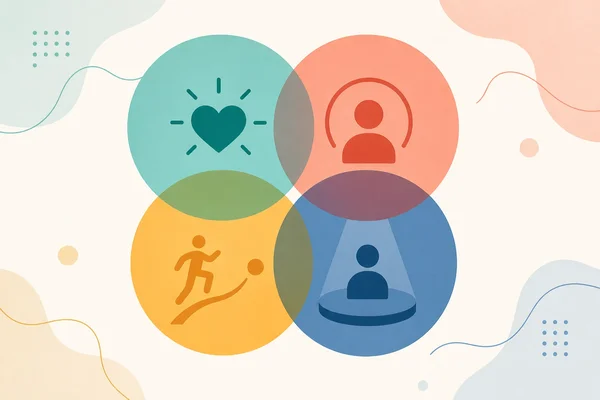
That shortcut can be inaccurate. Identity, attraction, behavior, and relationship appearance are related, but they are not the same thing.
| Layer | What it describes | Why it matters |
|---|---|---|
| Attraction | Who you are drawn to emotionally, romantically, or sexually | This can be private and may not match what others assume |
| Identity | The label you choose, such as straight, bi, queer, or questioning | This belongs to you, not to observers |
| Behavior | Who you date, kiss, have sex with, or build relationships with | Behavior can reflect opportunity, safety, timing, or preference |
| Presentation | How your relationship looks to other people | A straight-presenting relationship can still include a bi person |
This is why "am I bi or straight?" is often a more useful question than "what do other people think I look like?" Your inner pattern of attraction matters more than the gender of one current partner.
Difference Between Straight, Bi, Bihet, and Heteroflexible
Search terms like straight bi, bihet, and heteroflexible often appear together, but they do not mean exactly the same thing.
| Term | Common meaning | Careful note |
|---|---|---|
| Straight | Heterosexual; attracted to a different gender | Some people use "mostly straight" when straight feels close but incomplete |
| Bisexual or bi | Attraction to more than one gender | Attraction does not need to be equal, constant, or expressed through dating history |
| Straight-presenting relationship | A relationship others read as heterosexual | The relationship appearance does not define every partner's orientation |
| Bihet or bi het | Often used online for a bi person in an opposite-gender relationship, or for debate about straight-passing privilege | It can feel invalidating when used to imply a bi person is not queer enough |
| Heteroflexible | Mostly straight with some openness, attraction, or experience outside heterosexuality | Some people find it accurate; others see it as overlapping with bisexuality |
There is no single rule that says one word must fit you. Labels are communication tools. A good label should help you understand yourself, talk with trusted people, or find community. If a label makes you feel boxed in, you are allowed to move slowly.
The same care applies to flag searches. The bisexual pride flag is widely recognized. A "bi straight flag" or "bi and straight flag" is not a universally established orientation symbol in the same way. Heteroflexible flag designs exist online, but many are community-made variations rather than one official standard. If a symbol helps you feel seen, that can be meaningful; it still does not have to settle your identity.
Signs Your Attraction May Be Broader Than Straight
People often search for signs of bisexuality in males, females, or people of any gender because they want something concrete. It is understandable, but sexual orientation is not proven by clothing, voice, hobbies, masculinity, femininity, or how someone "acts." Those shortcuts can turn into stereotypes quickly.
More useful signs are internal patterns:
- You have had crushes, fantasies, or emotional pull toward more than one gender.
- You feel drawn to same-gender people in a way that seems different from admiration or friendship.
- Your attraction changes by context, person, season of life, or emotional closeness.
- You keep wondering whether "straight" explains most of you but not all of you.
- You feel relief, curiosity, or recognition when reading bisexual, queer, or heteroflexible experiences.
- You can imagine a romantic or intimate future with more than one gender, even if you have never acted on it.
None of these points has to settle the question. They are prompts for reflection, not a verdict. Some people know quickly. Others need months or years to understand what their attraction means. If a structured prompt would help, a private orientation reflection tool can give you questions to sit with while keeping the result exploratory.
Being Bi in a Straight-Presenting Relationship
One of the most common reasons people search "bi straight relationship" is that they are bisexual and dating, married to, or committed to someone of a different gender. From the outside, people may assume the relationship is straight. Inside the relationship, the bi person's identity may still matter deeply.
Being with one person does not erase the range of your attraction. A bisexual person in a monogamous relationship is not less bi because they are committed. A straight person in a relationship is not expected to stop being straight just because they are not dating every gender they could possibly be attracted to; the same logic should apply to bi people.
The hard part is often visibility. A bi person in a straight-presenting relationship may feel invisible in LGBTQ+ spaces and misunderstood in straight spaces. They may hear comments like "so you picked a side" or "you were just experimenting." Those comments can be painful because they turn a relationship status into a false identity test.
If this is your situation, consider three gentle practices:
- Decide who deserves access to your identity. You do not owe every acquaintance an explanation.
- Talk with your partner about what support looks like. That might mean using the word bisexual without embarrassment, attending Pride together, or correcting assumptions when safe.
- Keep connection with bi or LGBTQ+ community if it nourishes you. Community can be online, local, creative, private, or occasional.
Your relationship can be real, your commitment can be real, and your bisexuality can be real at the same time.

A Gentle Next Step If "Bi Straight" Describes Your Question
If "bi straight" feels close to your question, try replacing the pressure to choose with a few clearer reflections.
First, ask what you are trying to name: attraction, behavior, identity, relationship appearance, or community belonging. Those are separate layers. You might be mostly straight in identity, bisexual in attraction, straight-presenting in your current relationship, and still unsure about community. That is not a failure; it is a more precise map.
Second, notice whether your question is about desire or fear. "Who am I drawn to?" is different from "What would happen if I used a different label?" Fear about family, culture, dating, religion, or safety can make any label feel louder than the attraction itself. Move at a pace that protects you.
Third, give yourself permission to use temporary language. "Questioning," "mostly straight," "bi-curious," "heteroflexible," "bisexual," or no label at all can each be useful at different moments. You are allowed to update your words as your self-understanding grows.
For a low-pressure next step, you can review a few private prompts through GayTest's LGBTQ+ self-discovery guide, journal what feels familiar, and come back to the question later. The goal is not to force a final answer today. The goal is to listen honestly to what your attraction, comfort, and relationships have been telling you.

FAQ
Can you be bi and straight?
Usually, bisexual and straight describe different attraction patterns. However, a bisexual person can be in a straight-presenting relationship, have mostly different-gender dating experience, or feel a strong lean toward different-gender attraction. Some people also identify as mostly straight or heteroflexible when straight feels close but not complete.
What is the meaning of bi-straight?
Bi-straight is an informal phrase, not a universally agreed orientation. It may mean a bi person in a relationship that looks straight, a mostly straight person with some same-gender attraction, or someone who is questioning the line between bisexual and straight.
Is bihet the same as heteroflexible?
Not exactly. Bihet is usually internet shorthand and can be used in messy or critical ways, often around bi people in opposite-gender relationships. Heteroflexible more often means mostly straight with some flexibility, curiosity, or attraction beyond heterosexuality.
Does being with a different-gender partner make a bi person straight?
No. A relationship can show who someone is with right now, but it does not automatically define the full range of their attraction. A bi person can be deeply committed to a different-gender partner and still be bi.
Does she/her mean straight or bi?
No. Pronouns do not tell you sexual orientation. Someone who uses she/her may be straight, bisexual, lesbian, pansexual, queer, asexual, questioning, or another identity. Pronouns describe how someone wants to be referred to; orientation describes attraction.
What about countries or states with more gay people?
Population rankings are not a reliable way to understand your own sexuality. Surveys depend on safety, culture, wording, privacy, and whether people feel comfortable self-identifying. For personal exploration, your own attraction patterns matter more than country or state comparisons.
Is there a bi straight flag?
There is a widely recognized bisexual pride flag, and there are community-made designs for terms like heteroflexible. A specific "bi straight flag" is not universally established. If you use a flag, treat it as a symbol of expression, not proof that a label must fit forever.