Romantic vs. Sexual Attraction: Understanding LGBTQ+ Identities & Self-Test Guidance
Have you ever felt deeply connected to someone emotionally but didn't desire them physically? Or maybe you've felt a strong physical pull toward someone without wanting a romantic relationship. If so, you're not alone. Many people, especially those exploring their identity, find that attraction is more complex than a single label can describe.
Understanding the difference between romantic and sexual attraction is a vital step in self-discovery. It can bring immense clarity and validation to your feelings. We’ve created this guide to walk alongside you as you uncover these ideas, offering insights that can empower your personal journey. For those looking to explore these feelings further, a self-discovery quiz can be a helpful starting point.
This journey is yours to define. By learning about the different layers of attraction, you can better understand your own unique heart and mind.
What Exactly Are Romantic & Sexual Orientations?
Think of attraction as having different channels on a radio. One channel might be for physical connection, while another is for emotional intimacy. Sometimes they play the same song, and sometimes they don't. Sexual orientation and romantic orientation are two of these main channels.
Understanding that these can be separate is a key concept, particularly within the LGBTQ+ community. It allows for a more nuanced and accurate understanding of who we are and how we connect with others. It frees us from the pressure of a "one-size-fits-all" identity.
Defining Sexual Attraction: The Desire for Physical Intimacy
Sexual attraction is often the first thing people think of when they hear the word "attraction." It is an inherent desire or pull toward physical intimacy with another person. This can manifest in many ways, from wanting to kiss or touch someone to desiring a sexual relationship with them.
It's primarily about the body and physical connection. For example, you might see someone and feel a strong, instinctual physical response. This is sexual attraction at work. It is a core component of sexual orientation labels like gay, lesbian, bisexual, and straight.
Defining Romantic Attraction: The Desire for Emotional Connection
Romantic attraction, on the other hand, is about the heart and emotional connection. It is the desire to form a deep, intimate, and romantic bond with another person. This type of attraction is what fuels the desire for partnership, companionship, and romantic love.
This often involves:
- Wanting to go on dates and spend quality time together.
- Sharing deep thoughts, feelings, and secrets.
- Imagining a future or building a life with someone.
- Feeling a sense of warmth, affection, and "butterflies" that is tied to emotional intimacy, not just physical desire.
Someone can experience strong romantic attraction without any sexual feelings, and vice-versa.
Understanding the Split Attraction Model
The idea that romantic and sexual attraction can be separate is known as the Split Attraction Model (SAM). This framework is incredibly useful because it gives us the language to describe more complex experiences of attraction. It validates that your romantic and sexual feelings don't have to point in the same direction.
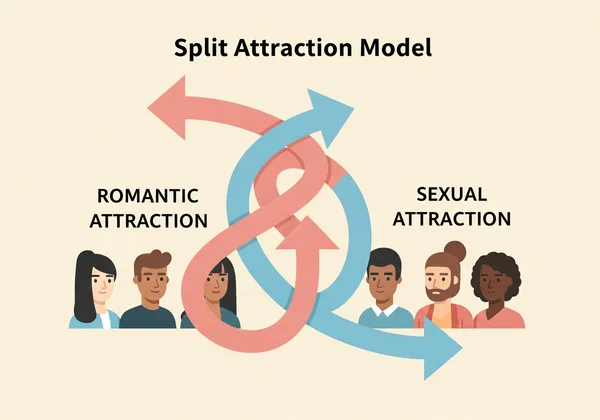
The SAM is not a rigid set of rules but a tool to help you understand yourself better. It’s widely used in asexual and aromantic communities but is helpful for anyone questioning their identity. It helps explain why someone might identify as bisexual but only feel romantic connections with one gender, for example. If you're curious about where you fall, an online orientation test can provide a space for reflection.
When Romantic and Sexual Attractions Don't Align
The Split Attraction Model becomes most powerful when someone's attractions don't perfectly align. This is more common than many people think.
Here are a few examples:
- Asexual and Homoromantic: A person might feel no sexual attraction to anyone (asexual) but desire a romantic, emotionally intimate relationship with people of the same gender (homoromantic).
- Aromantic and Bisexual: Someone could feel sexual attraction towards more than one gender (bisexual) but have no desire for a romantic relationship with anyone (aromantic).
- Heterosexual and Biromantic: A person may be sexually attracted to the opposite gender (heterosexual) but find themselves capable of falling in love with people of more than one gender (biromantic).
These are just a few of the infinite combinations possible. Recognizing this diversity can be incredibly freeing and helps reduce confusion and self-doubt.
Common LGBTQ+ Romantic Types and Identities
Using the Split Attraction Model, we can use specific terms to describe our romantic orientation. These labels are tools—use them if they feel helpful, and feel free to leave them if they don't.
Some common romantic orientations include:
- Homoromantic: Romantically attracted to people of the same gender.
- Heteroromantic: Romantically attracted to people of a different gender.
- Biromantic: Romantically attracted to two or more genders.
- Panromantic: Romantically attracted to people regardless of their gender.
- Aromantic: Experiences little to no romantic attraction to anyone.
- Demiromantic: Only experiences romantic attraction after forming a strong emotional bond with someone.
Learning these terms can feel like finding the right word for a feeling you've had for a long time.
Signs You Might Be Questioning Your Attraction Styles
It is completely normal to question your feelings. This questioning is not a sign of confusion, but a sign of deep self-awareness. If you're reading this, you are already taking a brave step toward understanding yourself more deeply.
You might be exploring your attraction styles if you find yourself thinking:
- "I love my best friend deeply, but I'm not sure if it's romantic."
- "I enjoy physical intimacy, but I rarely feel a need for a romantic relationship."
- "My crushes are always emotional, but the sexual part feels separate or non-existent."
- "The gender of the person doesn't seem to matter for my romantic feelings, but it does for my sexual feelings."
These thoughts are valid entry points into a richer understanding of your identity. Exploring them is a journey, and having the right tools can make it clearer. Taking a confidential LGBTQ+ orientation quiz can help you organize these thoughts.

Practical Reflection Prompts for Self-Discovery
To help you explore your own feelings, take a moment to reflect on these questions. There are no right or wrong answers. Be honest and gentle with yourself.
- Who do you daydream about? When you imagine a happy future, who is by your side? What is the nature of that relationship—is it primarily emotional, physical, or both?
- Think about your past crushes. What did you desire most from them? Was it holding their hand and sharing secrets, or was it a more physical connection?
- How do you define a "partner"? What qualities are most important to you in a partnership? Is it emotional support, shared goals, physical chemistry, or something else?
- Can you separate your feelings? Try to recall a time you felt attracted to someone. Can you identify which parts were romantic and which were sexual? Did they feel equally strong?
Answering these questions can provide valuable clues. Your patterns of attraction are unique to you, and understanding them is a form of self-care.
Embracing the Fluidity and Nuance of Your Feelings
One of the most important things to remember is that attraction can be fluid. Who you are attracted to today might not be the same as who you are attracted to in a year, or five years. Your identity is not set in stone. It is a living, evolving part of you.
Allow yourself the grace to grow and change. Some people find a label that fits them for life, while others move between labels or choose not to use any at all. All of these paths are valid. Your journey is about discovering what feels true for you right now. A tool like an online gay test can be a snapshot of your current feelings, helping you check in with yourself whenever you need to.
Your Empowering Journey of Understanding Attraction
Understanding the difference between romantic and sexual attraction is more than just learning new vocabulary. It's about giving yourself permission to be exactly who you are. Your feelings are valid, even if they don't fit into a simple box.
Let these insights guide your journey:
- Romantic attraction (emotional connection) and sexual attraction (physical desire) are distinct feelings.
- The Split Attraction Model is a helpful tool for understanding how these attractions can align or differ.
- Your identity is a personal journey, and it's okay for your feelings to be complex and fluid.
This knowledge empowers you to build relationships that are authentic and fulfilling. You get to define what love, connection, and partnership mean to you.

If you are ready to continue your journey of self-discovery, we invite you to start your test. Our free, confidential quiz is designed as a reflective tool to help you explore your orientation in a safe and supportive environment.
Disclaimer: This article is for informational purposes only and is not a substitute for professional psychological advice. If you’re feeling overwhelmed, a mental health professional or crisis organization can provide support.
Frequently Asked Questions About Romantic and Sexual Attraction
Can my romantic orientation be different from my sexual orientation?
Yes, absolutely. This is the core idea of the Split Attraction Model. For example, a person can be homoromantic (romantically drawn to the same gender) and bisexual (sexually drawn to multiple genders). Your unique combination is completely valid.
Is it normal not to feel romantic or sexual attraction towards anyone?
Yes, it is perfectly normal. People who experience little to no romantic attraction may identify as aromantic. Those who experience little to no sexual attraction may identify as asexual. These are natural variations in human experience, just like any other orientation.
How can I tell the difference between a strong friendship and romantic attraction?
This can be tricky, as deep friendships are also emotionally intimate. The key difference often lies in desire. Romantic attraction includes wanting a recognized partnership—an 'us against the world' bond. It also involves romantic gestures, like dating, which aren’t typical in platonic friendships.
Do I need a label for my romantic or sexual orientation?
No, you do not. Labels are tools, not rules. They can be incredibly helpful for finding community and understanding yourself, but they are not mandatory. If a label feels empowering, use it. If it feels restrictive, you can let it go. Your experience is what matters most.
What if my feelings change over time?
That is completely okay! Sexuality and romantic attraction can be fluid. Many people find that their feelings evolve as they grow and have new experiences. This is a normal part of the human journey. A great way to check in with yourself is to use a reflective tool, and you can always try our free tool to explore where you are now.